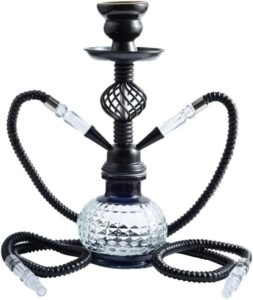
Ever taken a puff from a hookah and gotten a burning throat, a scratchy hit, and a taste that’s more smoke than flavor? You’re not the only one. Harsh sessions bug new smokers and old hands alike — and most people blame the tobacco, the coals, or the pipe itself. More often, the real problem is simpler: they don’t quite get how a hookah works. Once you do, the harshness mostly fixes itself. Here’s the whole system, part by part.
How Does a Hookah Work?
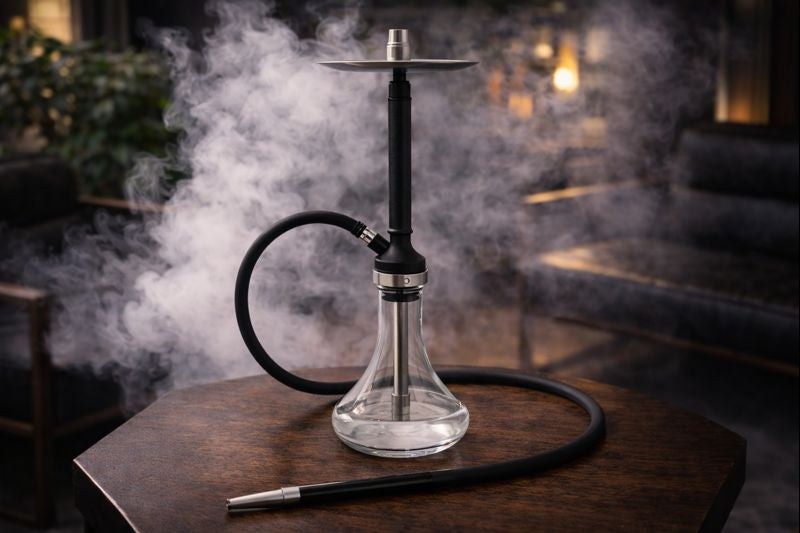
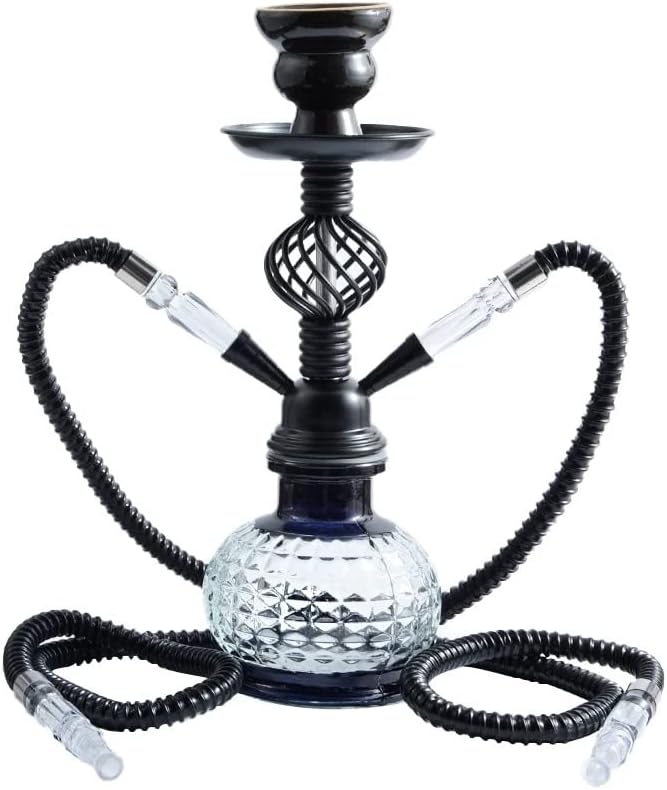
A hookah doesn’t burn the tobacco — it heats it. Charcoal sits on top and warms the shisha, a moist mix of tobacco, glycerin, honey, and flavoring, until it gives off vapor. When you pull on the hose, the smoke travels down through the downstem into the water, where it cools and gets a first round of filtering, then comes up through the hose to you.
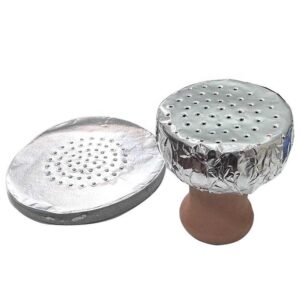
Packing matters as much as the parts. Fluff the shisha up so air can move evenly through it, and never pack it tight. Then cover the bowl with pierced aluminum foil, or use a modern heat management device (HMD) like the Kaloud Lotus — a metal screen that holds the coals above the tobacco. HMDs have been around for about 10 years now, and they keep the heat steadier than foil, which means less burning and longer sessions. On top go the coals: lit blocks, usually natural coconut shell or bamboo, burning cleanly at 400–600°F (200–315°C).
The draw is where the magic happens. Pulling on the hose drops the pressure inside the base — a partial vacuum. Boyle’s Law says when pressure drops in a closed system, outside air rushes in to balance it. Your suction pulls air through the bowl, down the stem, through the water, and up the hose. The base works like a reservoir, usually filled with water to about half its height. If you want the engineering version, Kaloud’s guide to how a hookah works breaks the same process into six steps, from heat to hose.
Hookah Parts and What Each One Does
Hookah Bowl
The bowl sits at the very top and, more than any other part, decides how good the smoke is. It holds the shisha and holds the charcoal above it, spreading heat evenly by conduction and radiation so the moisture and glycerin evaporate into thick clouds.
Charcoal Tray
The tray is the workbench. It sits just millimeters from the hot coals, so your tongs stay in reach without scorching the table or the tablecloth — most trays have a small lip so the tongs don’t slide off when you flip coals. It’s also where you park spare coals: pre-lit cubes or half-burned discs cure in the open air there, shedding extra moisture, and the tray’s shared heat keeps them warm so the temperature doesn’t crash when you swap coals. And if you use quick-light tablets, the tray is your mini hearth — light the coating right on it, wait for the sparking to stop and the tablet to turn gray, then move it with tongs.
Hookah Stem and Downstem
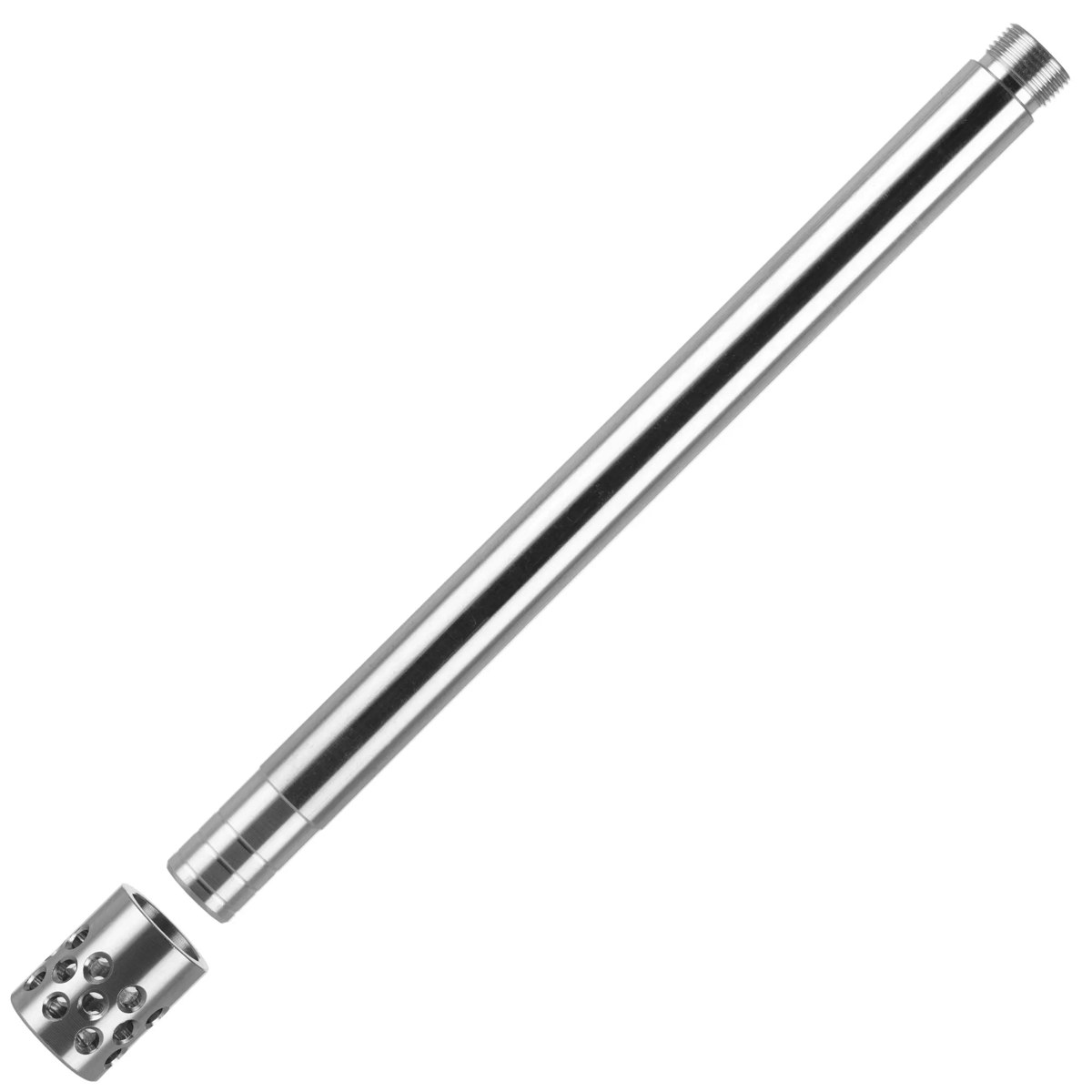
The stem is the metal (or composite) backbone connecting bowl to base, with ports for the bowl, tray, hose, and purge valve — all sealed airtight with threads or clips. The downstem is the guide channel: it carries the hot, dry smoke from the stem down into the water, keeping airflow steady. Without it, you’d just get raw hot smoke.
The tip of the downstem usually has a diffuser — a cluster of small holes or slits that shred the smoke into tiny bubbles instead of one big one. A typical diffuser has 10 to 20 holes just 1 to 2 millimeters wide, breaking the smoke into bubbles only a few microns across. That turbulence maximizes contact with the water: without a diffuser, the bigger bubbles cool roughly 30–50% less effectively. It also helps the water catch more soluble stuff like nicotine byproducts, and keeps the base from churning so hard it splashes or backflows.
Glass Base
The glass base is the foundation — clear glass, often the visual centerpiece of the room, with a wide bottom that won’t tip over mid-session (handy with a group). The water inside cools the smoke and catches particles, making each pull smoother. As the smoke cools it gathers in the space above the water — a little smoke reservoir waiting to be inhaled.
Hookah Hose
The hose is the bridge: it carries the cooled smoke from the base to your mouth.
Hookah Purge Valve
The purge valve is a one-way valve with a ball bearing inside. Blow gently into the hose and the positive pressure lifts the ball off its seat, venting stale or overheated smoke out of the base — without letting water flow back in. Breathe in, and the negative pressure pulls the ball back down, sealing it airtight. If the ball gets sticky from molasses or rusts in place, it leaks, makes the draw harder, and dilutes the flavor — clean it or swap it out right away.
On a multi-hose hookah, one person’s inhale pulls every ball to its seat, so nobody breathes in their neighbor’s leftover smoke. The trade-off: with all the balls seated at once, purging takes more effort.
Why Does a Hookah Turn Harsh?
Harshness is almost always a system problem, not a tobacco problem. When the heat, airflow, or setup falls out of balance — coals too hot, a tight pack choking the draw, water too low to cool the smoke, a leaky seal — the bowl overheats and the smoke turns scratchy. Keep the heat steady, the pack loose, the water right, and the seals tight, and the harshness mostly disappears. Kaloud’s hookah troubleshooting guide explains the same balance — heat, airflow, and setup — and what to do when it slips.