You just brought home a new briar pipe, you turn it over in the light, and there it is: a little dark patch on the bowl, a spot where the grain just stops. A fill. Your stomach sinks a little. Did you just buy a flawed pipe?
Short answer: probably not. Long answer: it depends on what the fill is, and honestly, on what you think the word “flaw” means. Let’s walk through it.
What Are Sandpits in a Briar Pipe?
Start with the wood itself. A briar pipe is carved from the root burl of the heath tree, and that burl grows underground. A little one takes decades to grow. A big one can take over a century.
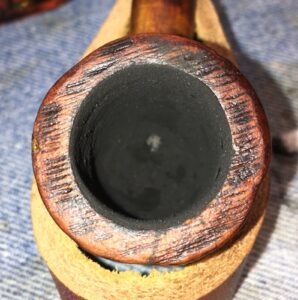
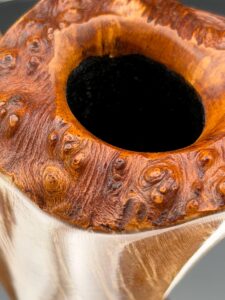
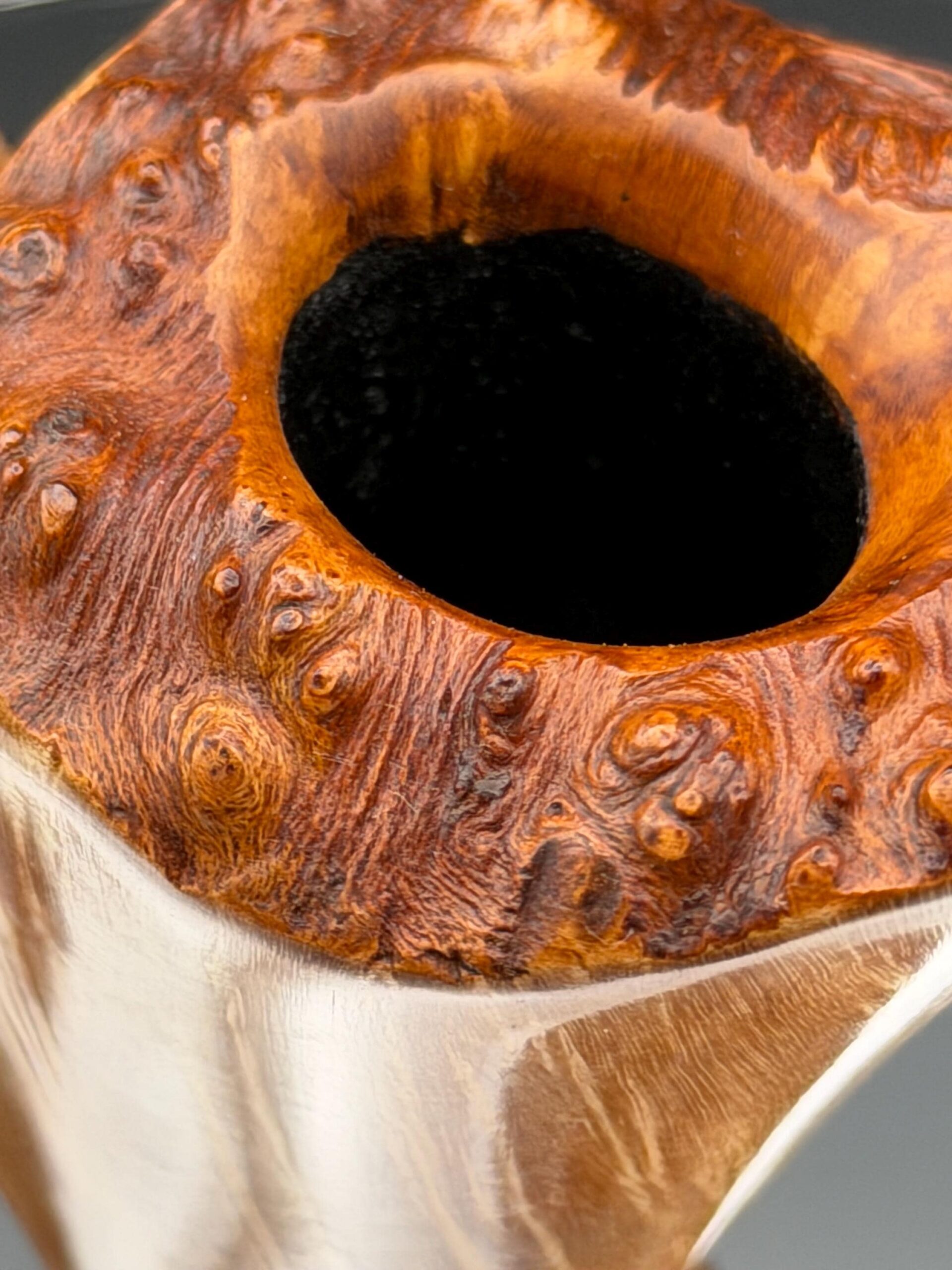
A hundred years underground is a long time to pick up junk. Sand and small stones get trapped in the wood as the burl grows, and the grain bends and shifts around them. When the pipe maker cuts into the block and shapes the bowl, some of those trapped bits fall out and leave little pits in the surface. That’s a sandpit. It’s not damage, and nobody did anything wrong. It’s just what natural briar does.
How Pipe Makers Fill Sandpits
So what does the maker do with a sandpit? He fills it. The filler is simple stuff: briar dust mixed with wood glue, packed into the hole.
Now here’s the part most buyers don’t know. If the sandpit goes all the way through the wood, the fill is actually the strong kind. The filler goes in deep and locks in, so a through-and-through fill is solid. It’s nothing to be scared of.
The trickier case is a fill that’s only on the surface, just a few microns thick. That kind could pop out, in theory. But in practice, the maker doesn’t leave it exposed. He bakes a lacquer finish onto the pipe, and that hard coat of lacquer sits right over the fill and protects it. The fill can’t come off because the finish is holding it in place.
When Fills Are Used to Draw the Grain
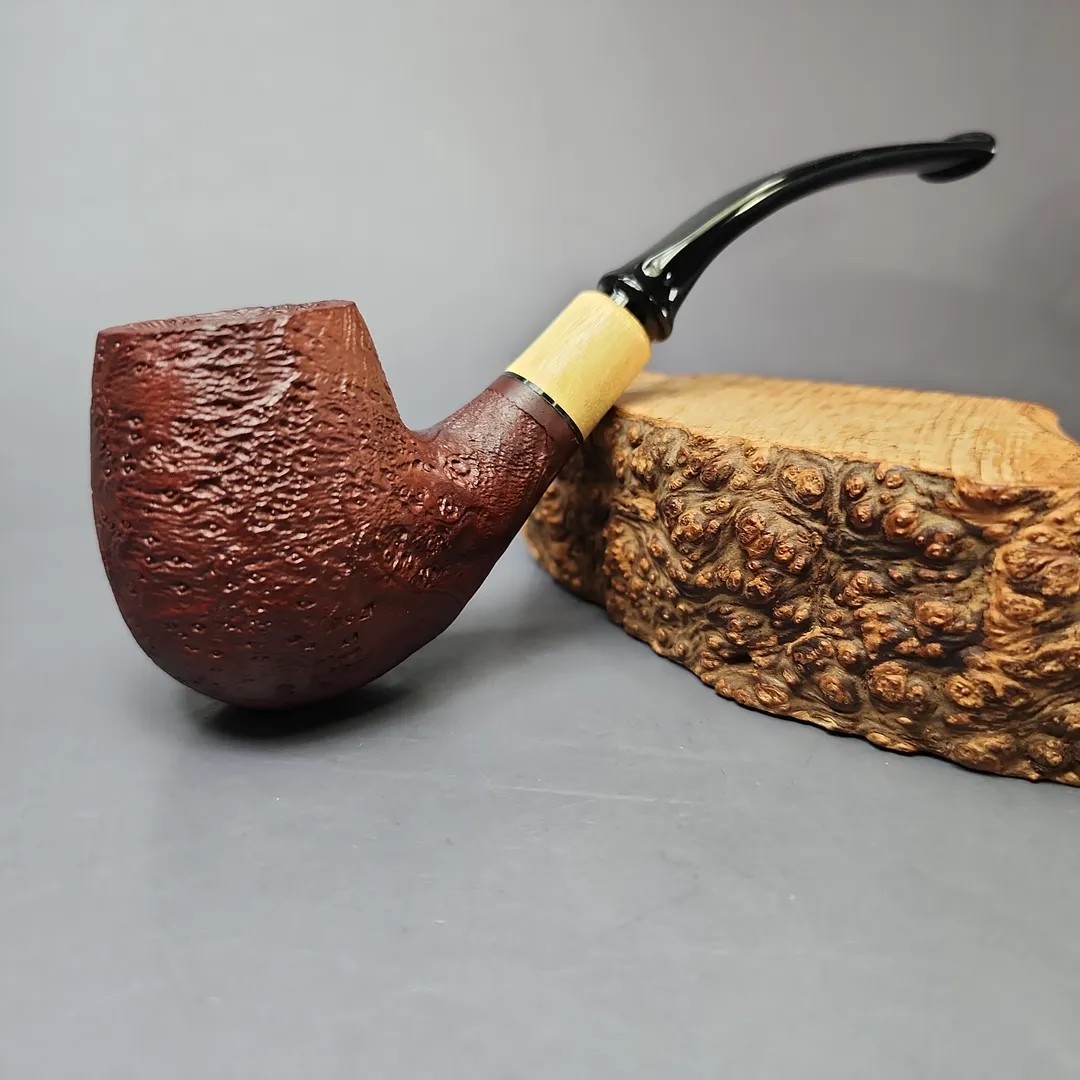
Fills have a second job, and this one is about looks. Sometimes a maker uses fill to draw grain that isn’t really there.
It usually goes like this. A cheap pipe is often made from the outer part of the briar root, where the wood isn’t great. The grain has problems: the color is off, the pattern is lopsided, and there are corroded sandpits, those black holes in the grain. So the maker takes briar dust mixed with glue and draws in the grain that’s missing, to make the pattern look natural.
Picture a pipe where the grain on the bottom and the left side all flows toward the right, but the right side barely has any grain at all. That’s where the fill goes in, sketching the missing lines so the whole pipe looks even. And again, you don’t have to worry about it falling out or getting damaged. The wood surface has been lacquered, and that layer of lacquer protects the fill underneath.
Here’s a tell you can use yourself. Smoke a pipe for a while and watch what the color does. A brand-name pipe gets darker with use. A cheap pipe gets lighter. Why? Because the brand-name pipe never had its grain painted on with fill. The cheap pipe did, and the painted-on grain fades as you smoke it. The difference shows up in your hands, not just on the price tag.
Why Fills and Sandpits Set the Price
Briar is a natural material, so no two blocks are alike. After the first rough shaping, the maker goes through the blanks by hand and grades them. Blocks with few sandpits become high-end pipes. Blocks with a lot of sandpits become mid-range and low-end pipes. The price follows the grading: fewer sandpits and fewer fills means a higher price, more sandpits and more fills means a lower price.
But here’s the key part: it doesn’t affect how the pipe smokes. A pipe full of fills still smokes just fine. So is it a flaw? That comes down to what “flaw” means to you, and how much of it you’re willing to accept.
Fills Mean It’s Real Briar
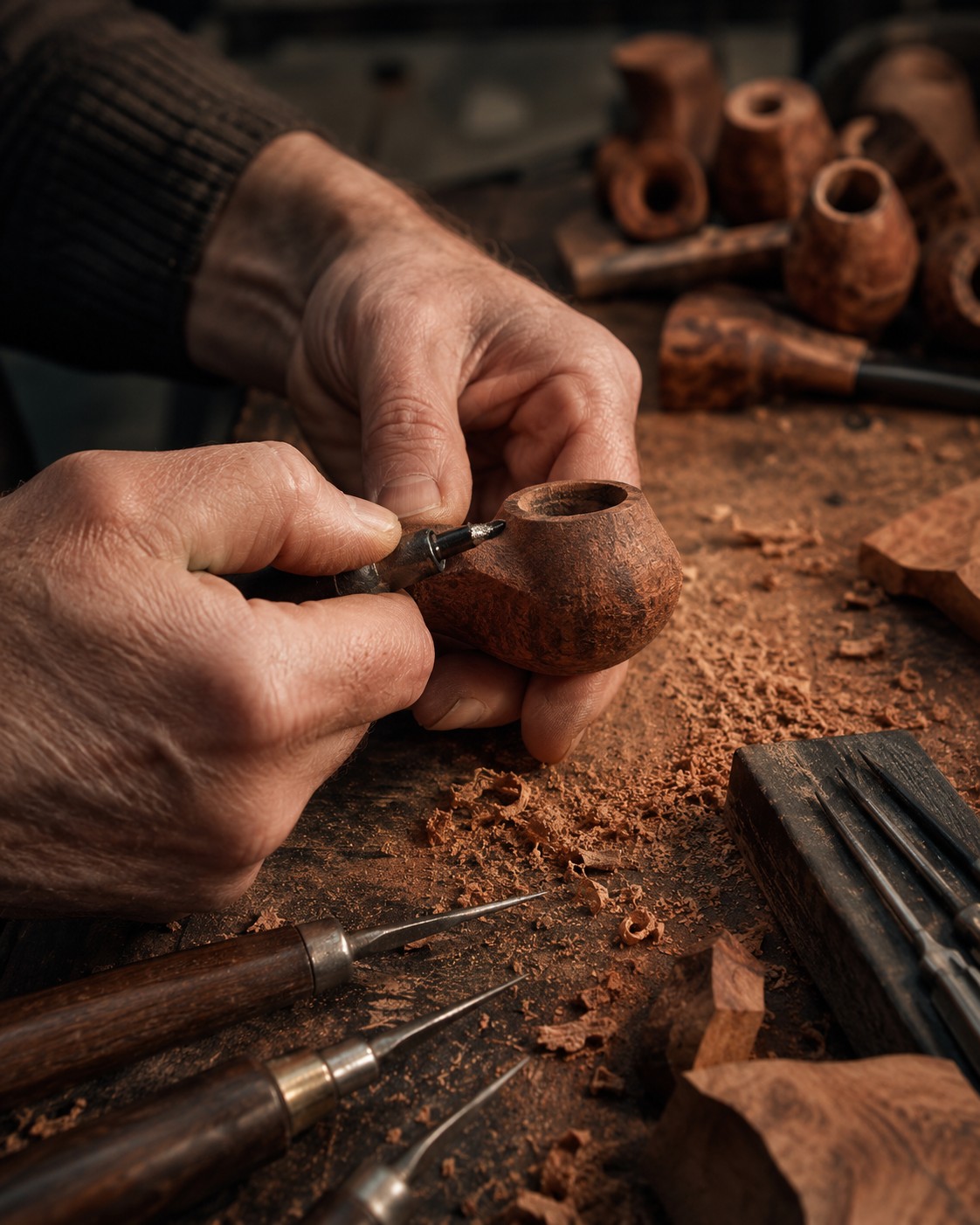
Old hands will tell you not to make too much of fills. Here’s their thinking: except for a handful of flawless brand-name pipes and artisan handmade pipes, most pipes have sandpits or fills. And that’s exactly how it should be. That’s the proof you’re holding natural briar root.
Think about it the other way around. If you made a pipe out of rosewood, you’d never see a sandpit in it at all. No fills, no pits, nothing. The author of this piece once picked up a pipe that cost 20 or 30 yuan and couldn’t find a single visible flaw on it. That tells you something. A perfect-looking pipe isn’t always the better pipe. Sometimes the little pits and fills are the signature of the real thing.
So next time you spot a fill on a pipe you’re thinking about buying, don’t walk away on the spot. Ask what kind of fill it is, look at how it’s finished, and remember what it says about the wood underneath. Most of the time, it’s not a flaw. It’s briar being briar.