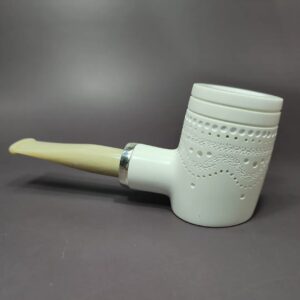
The stem is a key part of any pipe — how good it is makes or breaks the smoke. On a typical briar pipe, the stem is made of one of two materials: vulcanite (hard rubber) or acrylic resin. A vulcanite stem has a little give and feels lighter in the teeth; an acrylic stem feels distinctly harder.
Vulcanite vs. Acrylic Pipe Stems
A vulcanite stem comes in a single color — black — and it ages easily, so it needs regular polishing and care. An acrylic stem is hard, brightly colored, rich in variety, hard to bite through, and doesn’t oxidize easily.
Pipe Stem Shapes: Tapered, Saddle and Fishtail
By shape, there are two main families. The tapered stem runs in a simple, streamlined taper — the straight-tapered and saddle stems belong here. The saddle stem has squarer lines so your teeth can grip it, with a saddle-shaped underside. Look along a stem and you’ll see some narrow toward the end, while others flare out into a fishtail.
The P-Lip and Other Mouthpiece Designs
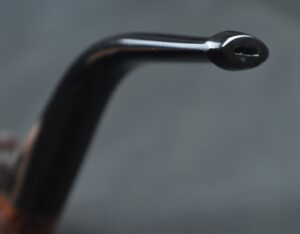
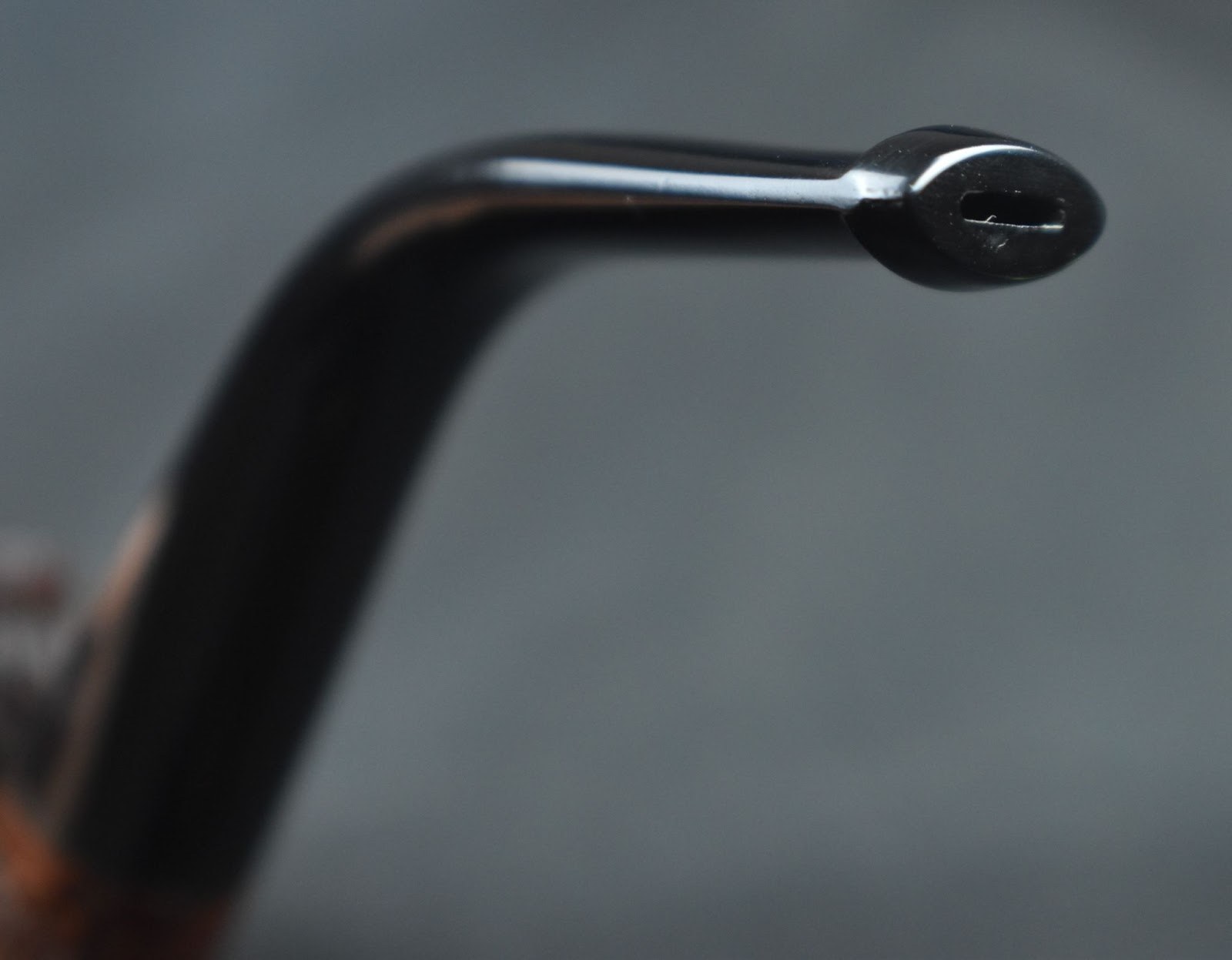
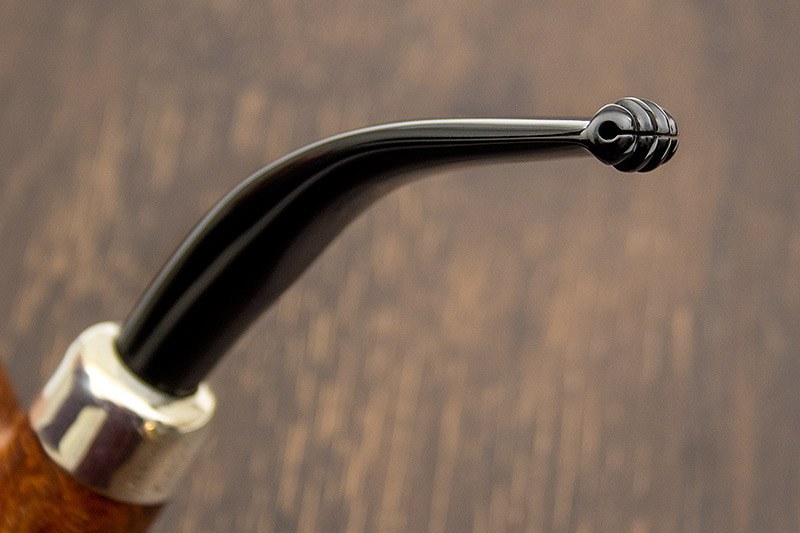
The lip — the part your teeth actually bite — comes in different forms too. The most famous is the P-Lip. The opening at the end of the stem is usually either a wide, flat slot or a round hole. And there’s a stem bored with two internal holes — the twin-bore.
Pipe Filters: 3mm, 6mm or 9mm?
Pipe filters come in three sizes: 3mm, 6mm, and 9mm. A 3mm filter lets you taste the tobacco at its most original; 6mm tastes lighter; 9mm lighter still. The 3mm filters are metal or paper, mostly there to keep tobacco bits out of your mouth. The 6mm filters are wood or paper — wood works best. The 9mm filters come in paper and wood versions, too. And there are activated charcoal filters, in both 6mm and 9mm.

One Stem or Two? Custom Pipe Stems
For reasons of cost and tradition, most pipes come with a single stem of one type. But some high-end pipes offer two different stems, so the smoker can swap for a change of pace. And if a stem gets damaged — or just doesn’t suit you — a pipe maker can make you a custom-made stem to order.