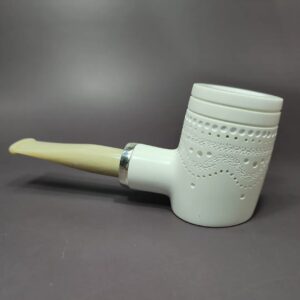
Briar pipes come in a bunch of different finishes — and the finish isn’t just about looks. It also says a lot about what the pipe is worth.
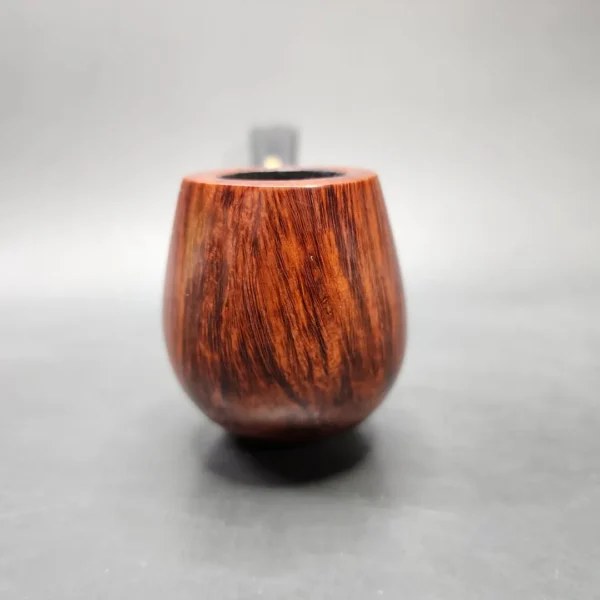
Smooth Finish: All About the Grain
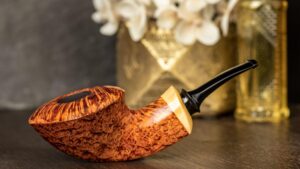
When a pipe’s surface is left completely plain, with no carving at all, the wood’s natural grain takes center stage. As a rule, the prettier the grain, the pricier the pipe. On a smooth pipe you’ll see two kinds of grain: straight grain, which follows the cross grain of the burl, and bird’s eye, which runs along the long grain.
Smooth pipes are often stained a deep brown to make the grain pop, though makers sometimes go lighter for an even more refined look. The trade has all kinds of terms for grading the grain on smooth pipes, but there’s no fixed standard — it comes down to judgment.
Top-shelf pipes are usually smooth, precisely because they show off gorgeous grain. But grain like that doesn’t turn up in every burl, so makers hand-pick only the best blocks for smooth finishes. That means fewer pipes — and higher prices.
Sandblasted Finish: Texture That Hides the Flaws
Sandblasting blasts away the softer wood and leaves a rugged, uneven surface behind. It’s a great way to hide small flaws in the briar, and that textured surface shrugs off scratches better than a smooth one. The trade-off: a sandblasted pipe generally ranks a notch below a smooth one, and it costs less.
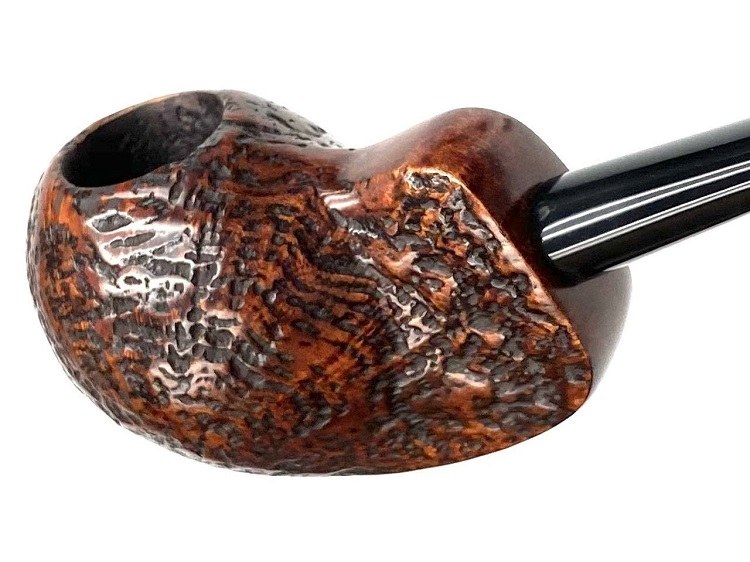
A sandblast both covers up imperfections and gives a pipe its own character. A blasted pipe isn’t prized for fine grain the way a smooth one is — it’s about personality and artistic expression.
The process strips the soft wood away and leaves the hard parts standing, pretty much the same effect as wind and weather eroding wood over time.
Carved Finish: Sculpture You Can Smoke
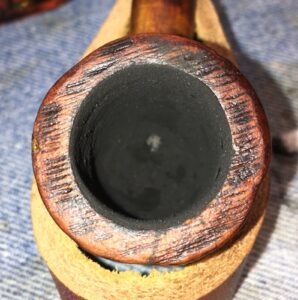
A carved finish is worked by hand with knives and tools, cutting a deliberately rough texture into the surface. Here’s the thing: most high-end carved pipes have little or no visible grain at all. Makers make up for that with skill, creating surfaces that are striking to look at and interesting to hold.
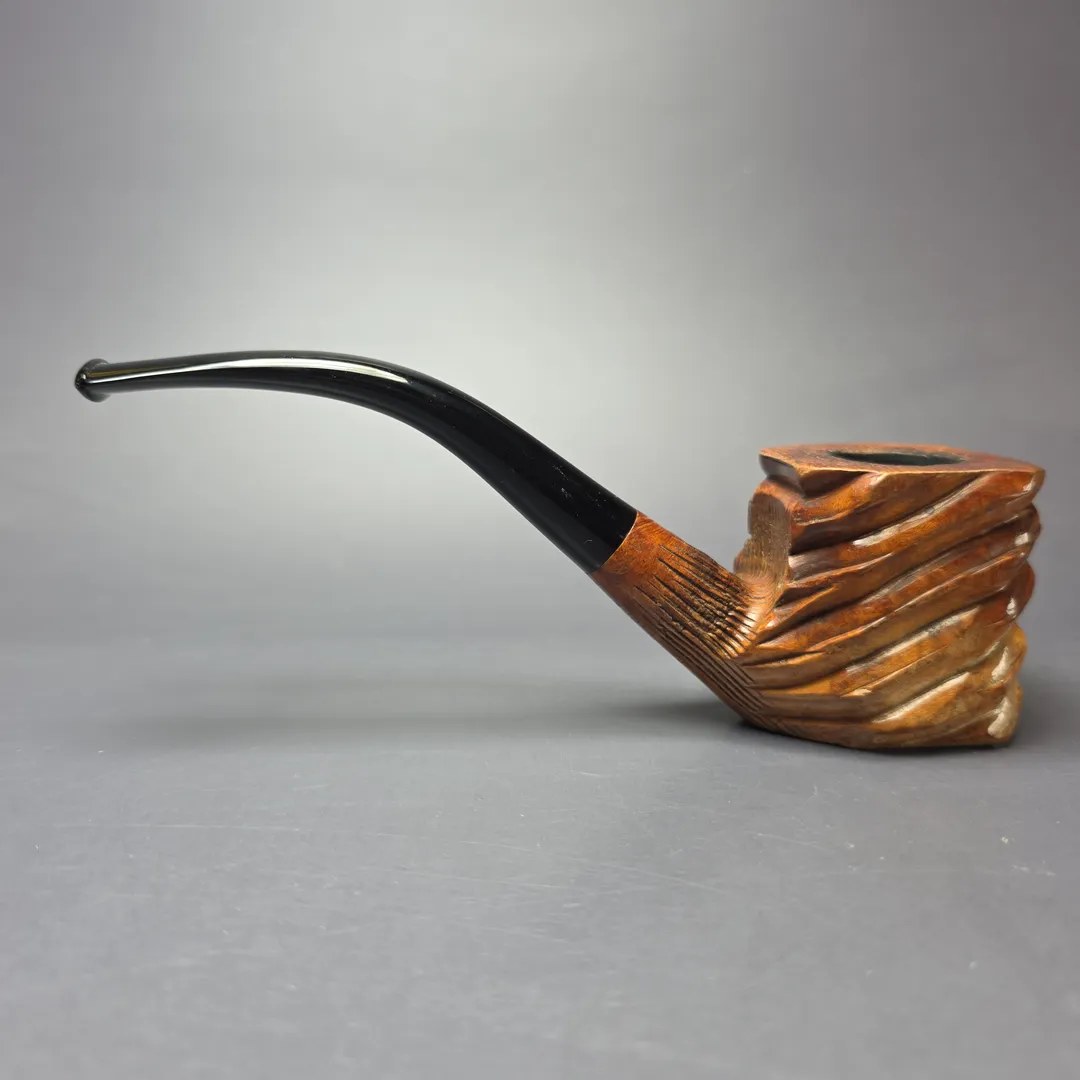
Carved pipes have a real three-dimensional feel. The patterns can be abstract or realistic — even a famous historical figure or an animal. They look great, and they feel unlike anything else in the hand.
They’re usually stained dark, which deepens the visual effect and makes the carving stand out even more.