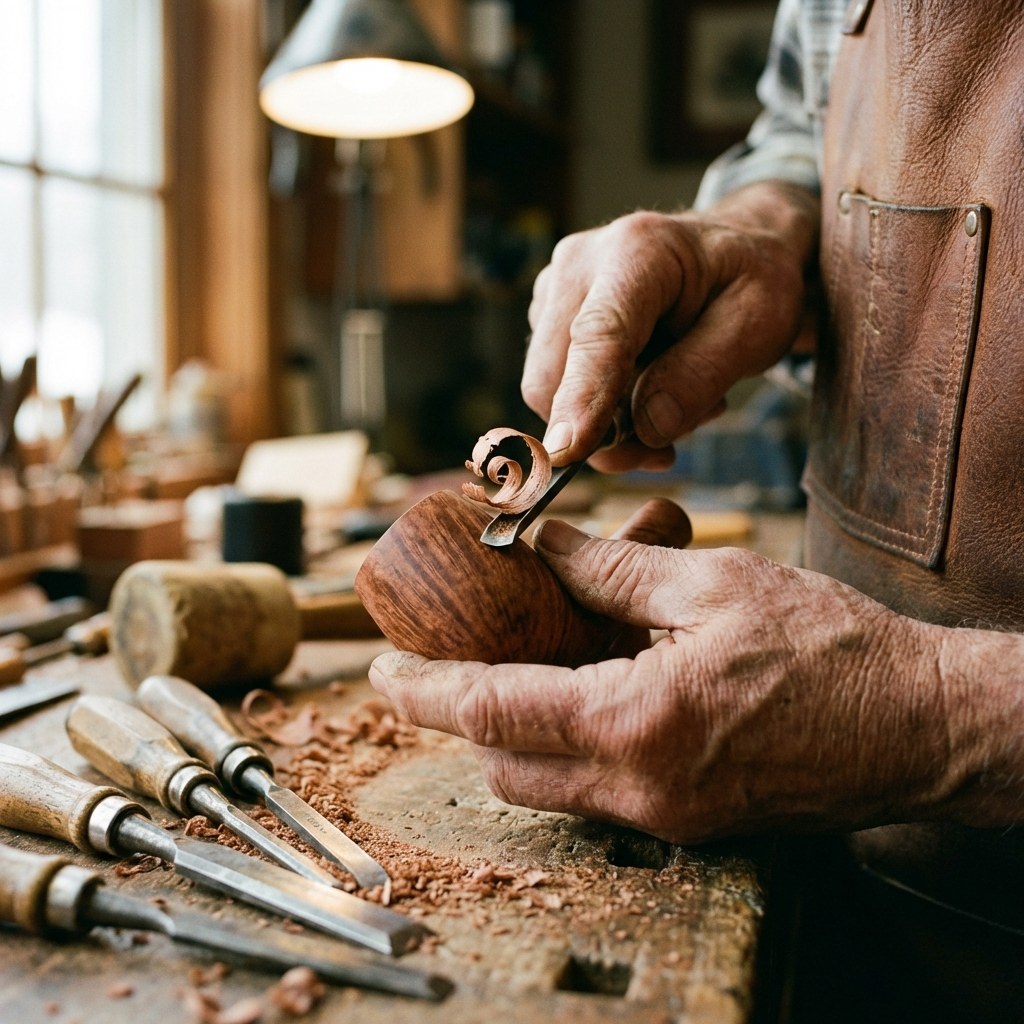
Walk into any pipe shop and you will find two worlds sharing one shelf. On one side, factory pipes by the dozen, identical shapes at friendly prices. On the other, handmade pipes — one maker, one block of briar, one pipe at a time — at prices that can be ten times higher. Are handmade pipes worth it? It is the oldest argument in the hobby — factory pipes vs. handmade — and the honest answer starts with what the money actually buys.
The Price Difference — and Why It Exists
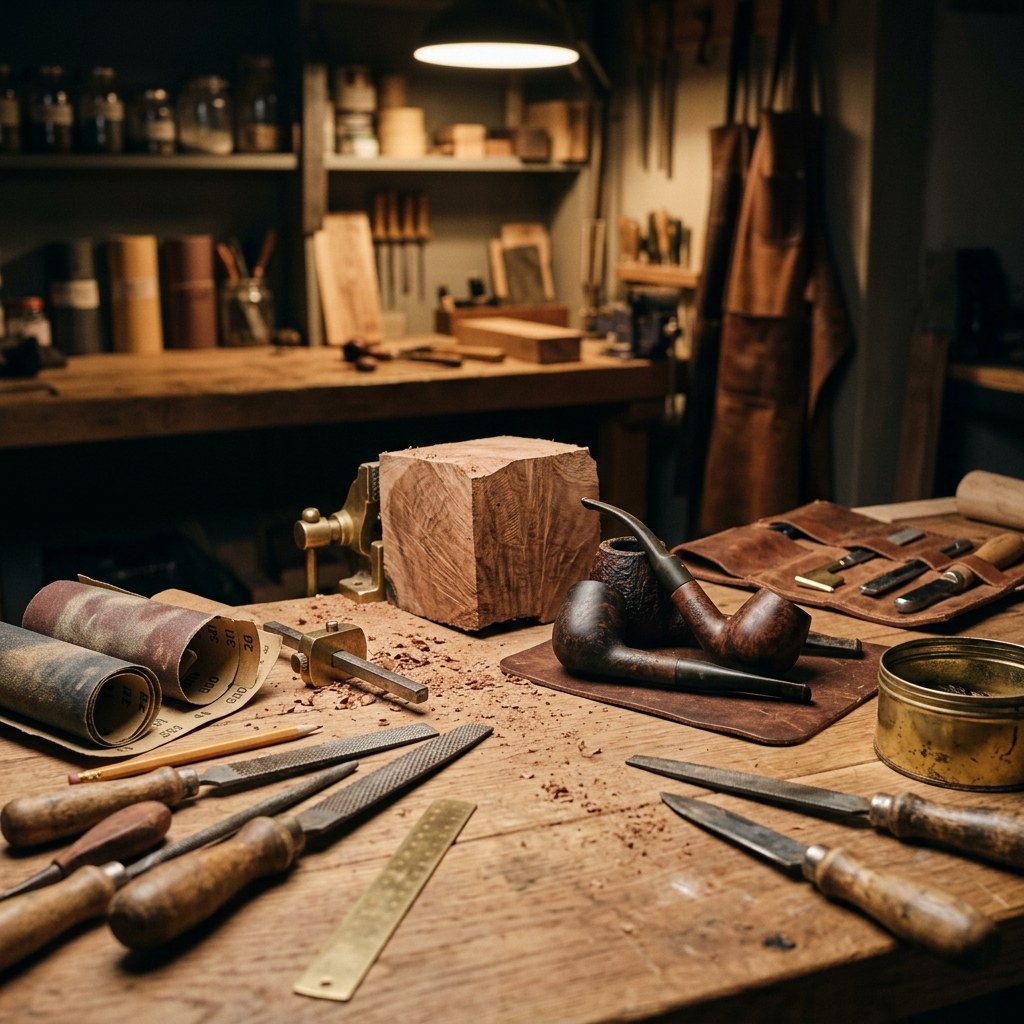
A machine-made pipe is efficient: briar blocks are turned on lathes and fraised to a pattern, bowls drilled by jig, stems molded and fitted in batches. A handmade pipe inverts the economics — a single maker spends hours on one pipe: selecting the block, shaping, drilling, sanding through the grits, cutting and hand-filing a stem from rod stock. You are not paying for mystery. You are paying for hours of skilled labor, and for output measured in pipes per week, not per hour.
Reading the Wood
Here is the difference no machine can copy. Briar is a natural material; every block hides different grain, density and flaws. A handmade maker reads each block before cutting — turning it in the light, planning the shape around the flame grain or bird’s-eye the wood actually offers, and cutting away from sand pits instead of through them. A production line cannot do this: the pattern is fixed before the wood is seen, so the grain lands where it lands. That is why two factory pipes of the same model look like cousins, while a handmade pipe looks like itself.
Collectibility: The Pipe as an Asset
A factory pipe is a tool — a good one, but a consumable. A handmade pipe by a recognized maker is also a collectible. Supply is tiny, the maker is identifiable, and demand from collectors is global; pipes by sought-after makers have been known to appreciate steeply — in strong markets, on the order of 20% a year for the most wanted names. Nobody should buy a pipe as a financial instrument, but it changes the arithmetic: the expensive pipe may be the one that holds, or even grows, its value, while the cheap one is worth its smoking pleasure alone.
Does a Handmade Pipe Smoke Better?
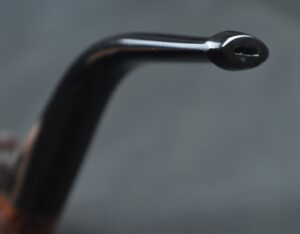
Usually, yes — and the reasons are mechanical, not mystical. Handmade drilling is aligned pipe by pipe: the airway meets the chamber at exactly the right point, the draw is open, and the stem is filed thin and comfortable with a properly funneled slot. Factory pipes are drilled to tolerances, and most smoke perfectly well — but the variance is wider. A handmade pipe also balances in the teeth the way its maker intended, because the maker held it, weighed it, and adjusted it. Consistency and intent: that is what you feel in the smoke.
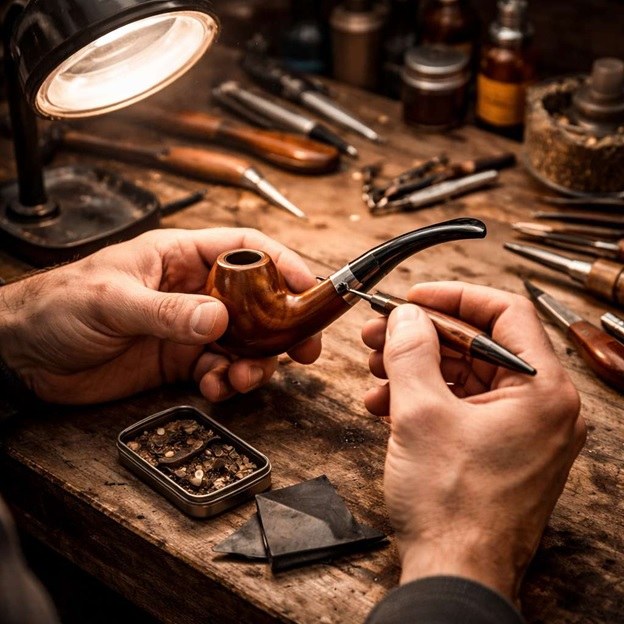
And yet the last word belongs to the oldest truth of pipe smoking: what decides how a pipe smokes is, in the end, the person smoking it. Packing, pace, dry tobacco and a rested rotation will make an honest factory pipe sing, and no handmade masterpiece survives being smoked hot and wet by a careless hand. Buy the handmade pipe for the craft, the grain, and the maker’s hand in it. Then honor it by learning to smoke it properly.